

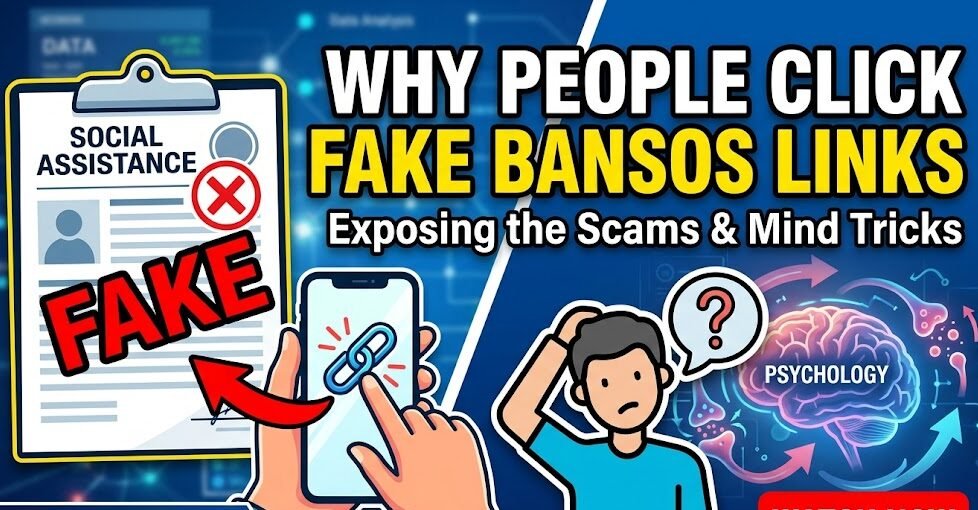
MEDAN, HALOSUMUT.COM – The digital world is currently being flooded with various social assistance (Bansos) hoaxes spreading through messaging apps and social media. Despite frequent warnings, many individuals still fall victim to these deceptive links.
These fake links often promise government aid or cash transfers, enticing users to click and provide personal data. The phenomenon of why people continue to engage with such suspicious content has become a major concern for digital security experts.
Psychologically, the urgency and the promise of “free money” play a significant role. When people are in a state of economic pressure, their critical thinking tends to decrease, making them more susceptible to manipulation by cybercriminals who exploit their desperation.
Technologically, these fraudulent sites are designed to look remarkably professional, often mimicking official government portals. This high level of visual deception makes it difficult for the average user to distinguish between a legitimate website and a phishing scam.
Authorities have repeatedly urged the public to verify any information regarding social assistance through official government channels only. Clicking on unverified links not only risks personal data theft but can also lead to financial loss through sophisticated malware and phishing schemes.
To prevent falling victim to these scams, it is crucial to recognize the characteristics of phishing links. Official government websites in Indonesia always use the cekbansos.kemensos.go.id domain. Any link claiming to be from a government body that uses generic domains like .com, .net, or blogspot is almost certainly a hoax.
Furthermore, never share your OTP (One-Time Password) or bank credentials with anyone. Government agencies never ask for sensitive financial information through unofficial chat platforms. Always cross-check information on the official Ministry of Social Affairs website or their verified social media accounts.
