

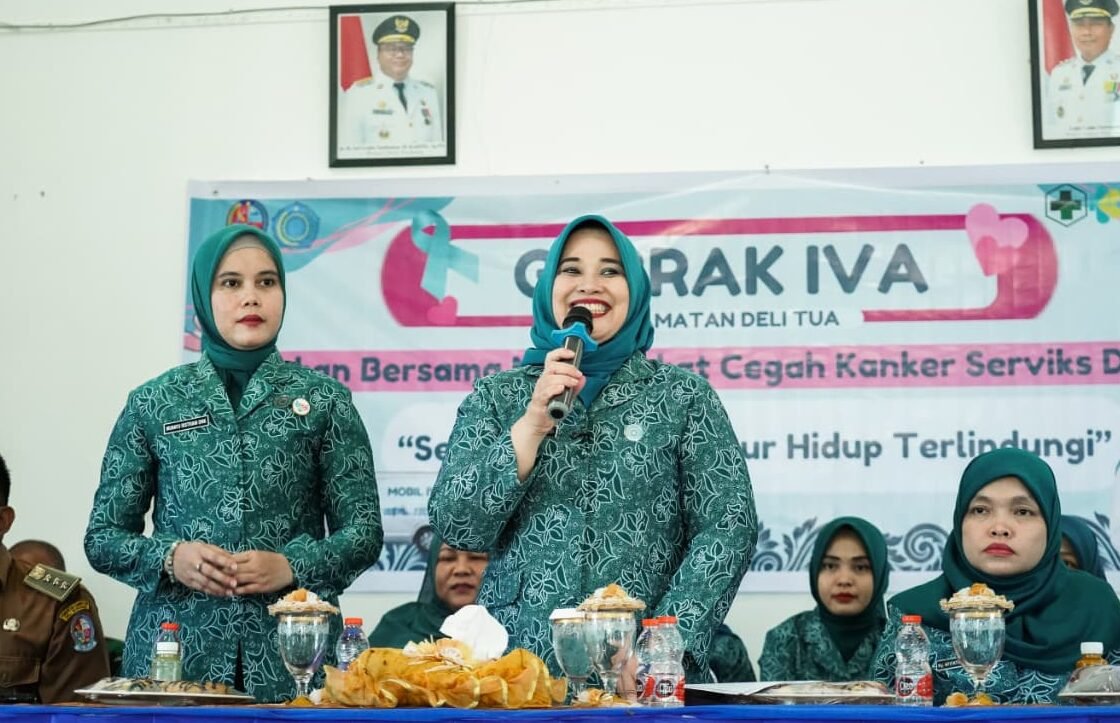
DELI SERDANG, HALOSUMUT.COM – Efforts to improve women’s health and reduce the risk of cervical cancer are gaining momentum in Deli Tua through the implementation of the GEBRAK IVA Test program. The initiative aims to increase public awareness about the importance of early detection while making cervical cancer screening more accessible for women in the community.
Local health officials, community organizations, and healthcare workers have been actively encouraging women to undergo Visual Inspection with Acetic Acid (IVA) screening, a simple and cost-effective method used to identify early signs of cervical abnormalities before they develop into cancer. Early detection through IVA testing has long been recognized as one of the most effective strategies for preventing cervical cancer-related deaths.
The GEBRAK IVA Test movement reflects a growing commitment to strengthening preventive healthcare and empowering women to take proactive steps in safeguarding their health.
One of the primary goals of the program is to eliminate misconceptions and fear surrounding cervical cancer screening.
Health workers involved in the initiative emphasize that many women delay examinations because of limited information, social stigma, or concerns about the screening process. By conducting education campaigns and community outreach activities, the program seeks to encourage more women to participate in routine health checks.
Medical experts note that low screening participation remains a significant challenge in Indonesia, contributing to delayed diagnosis and higher mortality rates associated with cervical cancer.
Through educational efforts, organizers hope more women will understand that early detection dramatically increases the chances of successful treatment.
IVA testing is widely used as an early screening method because it is affordable, simple, and can be performed at primary healthcare facilities.
The procedure involves applying a mild acetic acid solution to the cervix and observing any abnormal changes that may indicate precancerous lesions. Results are available quickly, allowing healthcare providers to determine whether further examination is necessary.
Health authorities continue to promote IVA screening as a practical tool for reducing cervical cancer cases, particularly in areas where access to more advanced diagnostic services may be limited.
The GEBRAK IVA Test initiative aligns with broader efforts by Indonesian health authorities to improve cervical cancer prevention and early detection.
According to public health data, cervical cancer remains one of the most common cancers affecting women in Indonesia. Many cases are diagnosed at advanced stages, highlighting the importance of expanding screening coverage and increasing public awareness.
National programs continue to encourage routine screening and preventive healthcare measures to reduce the burden of cervical cancer across the country.
Bringing Healthcare Closer to Women
A key strength of community-based screening initiatives is their ability to reach women who might otherwise face barriers to healthcare access.
Recent innovations in Deli Serdang, including mobile IVA screening services, have demonstrated how local governments and community organizations can bring preventive healthcare directly into neighborhoods and villages. These efforts help ensure that more women receive timely screenings without the need for extensive travel.
Healthcare professionals believe such outreach programs play a crucial role in improving participation rates and reducing healthcare disparities.
Public health experts increasingly emphasize prevention as one of the most cost-effective strategies for improving health outcomes.
Rather than focusing solely on treatment after disease develops, preventive programs such as IVA screening allow healthcare systems to identify risks early and intervene before serious complications occur.
Globally, health organizations continue to promote early screening, HPV vaccination, and public education as the three main pillars of cervical cancer prevention. These approaches have been shown to significantly reduce disease incidence and mortality when implemented consistently.
The success of initiatives like GEBRAK IVA Test depends heavily on community involvement.
Local leaders, women’s groups, healthcare workers, and residents all play important roles in encouraging participation and spreading awareness. By fostering open discussions about women’s health, communities can help overcome stigma and create a culture where preventive healthcare is prioritized.
Health advocates hope that increased participation in screening programs will lead to earlier diagnosis, improved treatment outcomes, and ultimately fewer cervical cancer cases in the future.
As awareness campaigns continue and access to screening services expands, the GEBRAK IVA Test initiative is expected to make a meaningful contribution to women’s health in Deli Tua and surrounding areas.
The program serves as a reminder that early detection remains one of the most powerful tools in the fight against cervical cancer. Through education, community engagement, and accessible healthcare services, local stakeholders are working together to protect women and promote healthier communities.
For many healthcare professionals, the message is simple: when cervical cancer is detected early, lives can be saved.
