

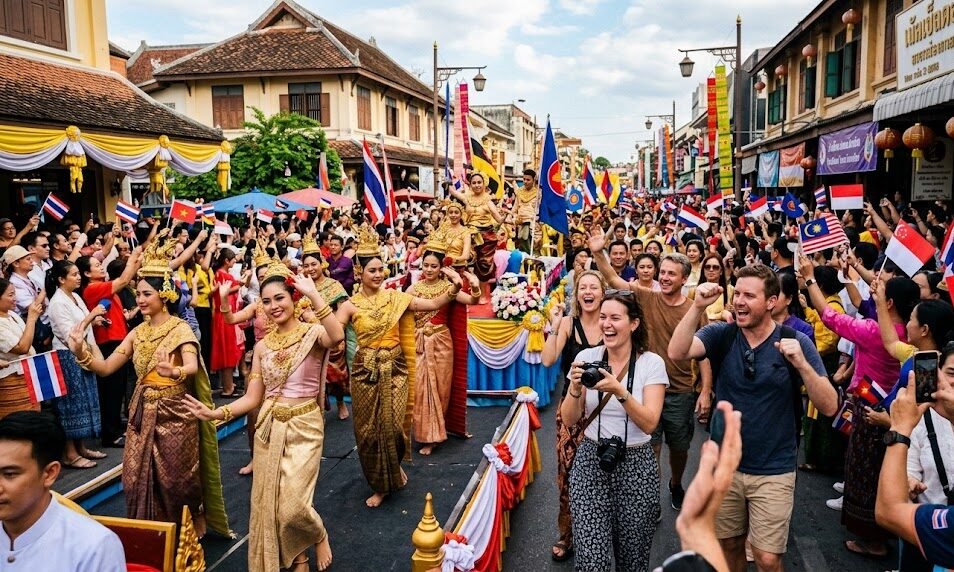
SOUTHEAST ASIA, HALOSUMUT.COM – Once celebrated primarily by local communities, many of ASEAN’s cultural festivals have evolved into internationally recognized tourism brands. From massive water celebrations in Thailand to heritage festivals in Indonesia and lantern-filled events in Vietnam, these cultural gatherings are increasingly attracting global audiences and generating significant economic benefits.
As international travelers seek more authentic experiences, ASEAN nations are leveraging their unique cultural traditions to strengthen tourism competitiveness. Festivals are no longer viewed solely as cultural events; they have become strategic tourism assets capable of boosting national branding, attracting foreign visitors, and creating year-round economic opportunities.
SEE ALSO >>> Why Neighborhood, WTAPS, and Human Made Remain the Powerhouses of Japanese Streetwear in 2026
Across the region, governments, tourism authorities, and local communities are working together to transform traditional celebrations into world-class tourism attractions without losing their cultural identity.
Cultural Heritage Becomes a Global Attraction
One of the biggest reasons behind the international success of ASEAN festivals is their authenticity.
Unlike many modern entertainment events, festivals such as Songkran in Thailand, Thingyan in Myanmar, and Bali Arts Festival in Indonesia are deeply rooted in local history and tradition.
Travelers increasingly value experiences that provide cultural immersion rather than standard sightseeing. This shift in tourism preferences has elevated traditional festivals into must-visit attractions for international visitors seeking meaningful connections with local communities.
Industry observers note that cultural authenticity has become one of the strongest competitive advantages for ASEAN destinations in an increasingly crowded global tourism market.
Digital Marketing Amplifies Global Reach
The rise of social media platforms has dramatically changed how cultural festivals are promoted worldwide.
A single viral video showcasing water fights during Songkran or thousands of glowing lanterns during the Hoi An Lantern Festival can reach millions of viewers within hours.
Tourism boards across Southeast Asia have embraced digital campaigns, influencer partnerships, and content-driven marketing strategies to attract younger travelers. Platforms such as Instagram, TikTok, YouTube, and travel blogs have become powerful tools for transforming local festivals into global tourism phenomena.
As a result, many ASEAN festivals now enjoy international visibility that would have been nearly impossible a decade ago.
Tourism Revenue Continues to Grow
Festival tourism has emerged as a major economic driver throughout Southeast Asia.
Hotels, restaurants, airlines, transportation providers, local artisans, and small businesses often experience significant revenue increases during major festival periods. For many destinations, cultural events have become an important component of annual tourism strategies.
Economic analysts point out that festival tourism also encourages visitors to stay longer and spend more compared to traditional sightseeing trips. This broader economic impact helps create jobs while supporting local entrepreneurship and community development.
Several ASEAN countries are now investing heavily in tourism infrastructure to accommodate growing numbers of international visitors attending cultural celebrations.
Governments Are Turning Festivals Into National Brands
Many ASEAN governments increasingly recognize the branding power of cultural festivals.
Thailand’s Songkran, for example, has evolved into a globally recognizable event associated with Thai culture and hospitality. Similar efforts can be seen across Indonesia, Vietnam, Cambodia, Malaysia, Laos, and the Philippines as countries seek to position their festivals as signature tourism experiences.
Tourism authorities are developing long-term strategies that combine cultural preservation with destination marketing. These initiatives often include international promotional campaigns, improved visitor services, event modernization, and partnerships with global travel operators.
The goal is not only to increase visitor numbers but also to strengthen each country’s cultural identity on the international stage.
Balancing Tourism Growth and Cultural Preservation
While international popularity brings economic benefits, it also presents challenges.
Experts warn that excessive commercialization can sometimes dilute the cultural significance of traditional celebrations. Maintaining authenticity while accommodating growing tourist demand remains a delicate balancing act for many destinations.
Community leaders and cultural organizations across ASEAN continue to emphasize the importance of protecting traditional customs, rituals, and local participation. Sustainable tourism strategies are increasingly being adopted to ensure that festivals remain culturally meaningful while generating economic value.
Many successful festivals now integrate cultural education programs that help visitors understand the historical and spiritual significance behind the celebrations.
The Rise of Experience-Driven Travel
The global tourism industry is increasingly shifting toward experience-based travel, a trend that strongly benefits ASEAN festivals.
Modern travelers are no longer satisfied with simply visiting landmarks. They want to participate in local traditions, engage with communities, sample regional cuisine, and create memorable cultural experiences.
ASEAN festivals naturally fulfill these expectations by offering immersive experiences that cannot be replicated elsewhere. This growing demand for authentic cultural engagement is expected to further strengthen the region’s position in the global tourism landscape.
Tourism experts predict that cultural festivals will become even more important as destinations compete for travelers seeking meaningful and personalized experiences.
A Bright Future for ASEAN Cultural Tourism
The transformation of ASEAN festivals into global tourism brands reflects the region’s ability to combine heritage preservation with modern tourism innovation.
From Thailand’s Songkran and Myanmar’s Thingyan to Indonesia’s Bali Arts Festival and Vietnam’s Lantern Festival, these celebrations continue to attract millions of visitors while showcasing Southeast Asia’s rich cultural diversity.
As digital promotion expands and international interest continues to grow, ASEAN festivals are expected to play an even greater role in shaping the region’s tourism future. More than just annual celebrations, they have become powerful symbols of cultural identity, economic opportunity, and global connectivity.
