

HALOSUMUT.COM, JAKARTA – As the holy month of Dhu al-Hijjah 1447 H approaches, Muslims worldwide are preparing to welcome one of the most sacred times of the year, which culminates in the celebration of Eid al-Adha.
Among the most highly recommended acts of worship during the first ten days of Dhu al-Hijjah are the Tarwiyah and Arafah sunnah fasts. These fasts possess extraordinary virtues and a deep history connected to the journeys of the Prophets.
Historically, the Tarwiyah fast—observed on the 8th of Dhu al-Hijjah—is deeply tied to the narrative of Prophet Ibrahim (Abraham). The word Tarwiyah translates to “thinking” or “reflecting.”
On this specific day, Prophet Ibrahim received a divine dream from Allah SWT commanding him to sacrifice his beloved son, Prophet Ismail. Prophet Ibrahim spent the entire day contemplating, reflecting, and pondering whether the dream was a genuine revelation from Allah or a deception from Satan.
Following that day of reflection, on the 9th of Dhu al-Hijjah, Prophet Ibrahim received absolute spiritual certainty and clearly understood that the dream was indeed an explicit command from Allah SWT.
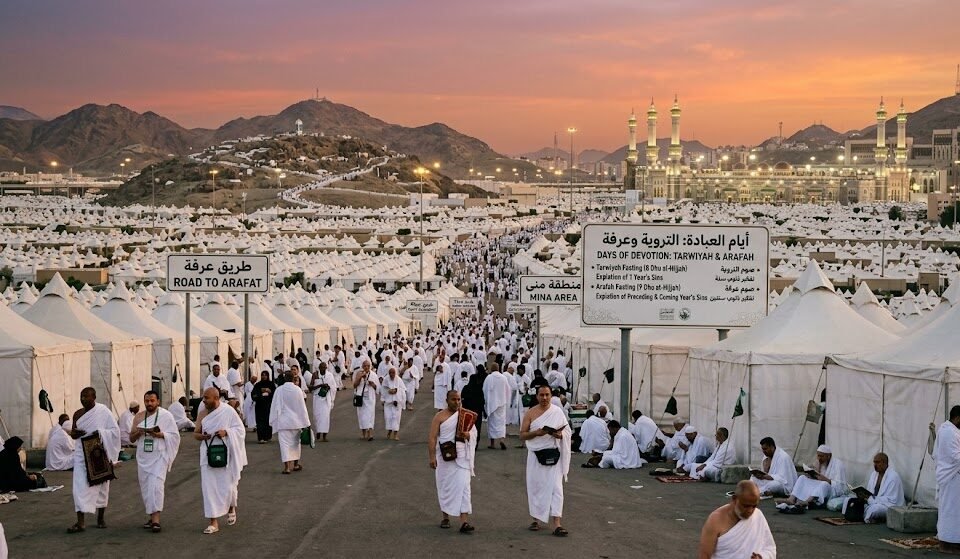
This day of realization is known as the Day of Arafah, which translates to “knowing” or “realizing.” Concurrently, for pilgrims performing Hajj, the 9th of Dhu al-Hijjah is the pivotal moment of Wuquf (standing) on the plain of Mount Arafat, a core pillar of the pilgrimage.
The spiritual virtues of these two fasts are highly profound for Muslims who are not currently performing the Hajj pilgrimage. According to various authentic prophetic traditions (Hadiths), observing the Tarwiyah fast can erase one’s sins committed over the past year.
Meanwhile, the Arafah fast holds an even greater weight of spiritual reward, as the Prophet Muhammad SAW stated that fasting on the Day of Arafah expiates the sins of the preceding year and the coming year.
To perform these sunnah fasts properly, the procedures are identical to regular Islamic fasting, beginning with a clean intention (niat) made before dawn (Fajr), refraining from food, drink, and worldly desires throughout the day, and breaking the fast at sunset (Maghrib).
The recitation of the intention for the Tarwiyah fast is as follows:
“Nawaitu shauma tarwiyata sunnatal lillahi ta’ala”
(Meaning: “I intend to fast the sunnah day of Tarwiyah for the sake of Allah the Almighty”).
Meanwhile, for the Arafah fast on the subsequent day, the intention to be recited is:
“Nawaitu shauma ‘arafata sunnatal lillahi ta’ala”
(Meaning: “I intend to fast the sunnah day of Arafah for the sake of Allah the Almighty”).
Beyond the physical acts of fasting, Islamic scholars emphasize that the first ten days of Dhu al-Hijjah represent an unparalleled window of spiritual opportunity. Prophet Muhammad SAW taught that there are no days in which righteous deeds are more beloved to Allah than these ten days.
Therefore, Muslims are highly encouraged to pair their Tarwiyah and Arafah fasting with an increase in dhikr (remembrance of Allah), specifically reciting Tahmid (Alhamdulillah), Tahlil (La ilaha illallah), and Takbir (Allahu Akbar) throughout their daily routines.
For working professionals and busy individuals, practicing these sunnah fasts also serves as an excellent emotional and spiritual reset halfway through the lunar calendar year.
It bridges the spiritual gap for those who have not yet had the physical or financial opportunity to perform the Hajj pilgrimage in Mecca, allowing Muslims worldwide to share in the spiritual atmosphere, solidarity, and blessings of the pilgrims standing on the plains of Arafat.
Furthermore, it is highly recommended to engage in charity (sedekah) and extensive Quranic recitation alongside these fasts.
Maximize these blessed days as a spiritual preparation to welcome the Day of Sacrifice (Eid al-Adha), ensuring that the heart is fully purified and ready to understand the deep values of obedience, sacrifice, and community sharing exemplified by Prophet Ibrahim and his family.
Source: Sejarah Puasa Tarwiyah-Arafah

1 Comment
Pingback: Celebrating Eid al-Adha 2026: 50 Heartfelt, Deeply Meaningful, and Prayerful Greetings to Share with Your Loved Ones - Halo Sumut