

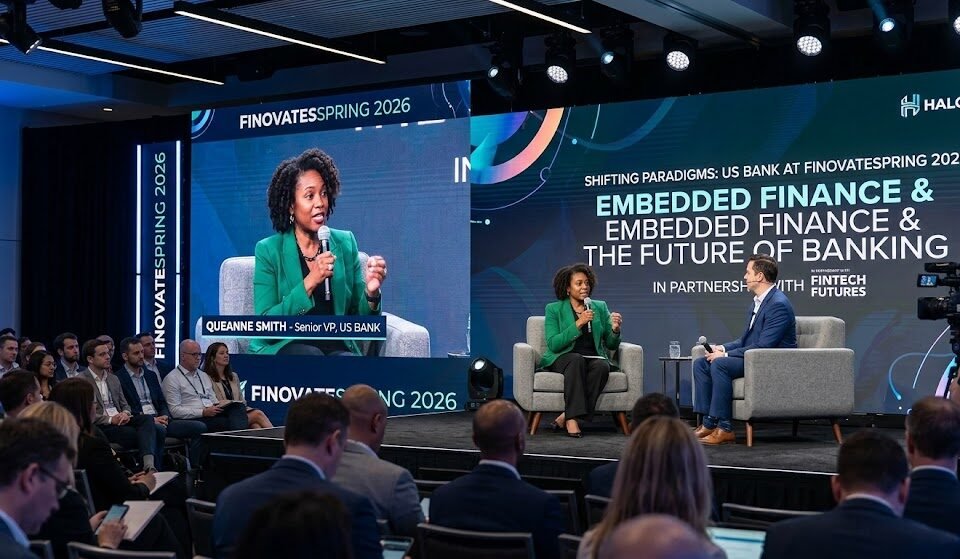
HALOSUMUT.COM – The global banking ecosystem is undergoing a massive structural shift, and traditional financial institutions are being forced to adapt rapidly. In an exclusive video interview captured at the prestigious FinovateSpring 2026 conference in San Diego, FinTech Futures sat down with Queanne Smith, the Senior Vice President of Business Impact Strategy at US Bank.
The high-profile discussion delved deep into the rapid rise of embedded finance, exploring how this technological evolution is actively disrupting conventional banking frameworks and what critical lessons traditional banks must learn from their aggressive big tech competitors.
SEE ALSO: Why Buy Now Pay Later (BNPL) Defaults are Rising in Lifestyle Spending
During the insightful session, Smith meticulously analyzed the intricate balance banks must maintain when partnering with third-party digital platforms. A core challenge for modern institutions is expanding their market reach through external channels while successfully preserving direct, long-term relationships with their core customers.
As tech giants continue to integrate financial services seamlessly into daily applications, the interview highlights how traditional banking players can effectively compete against the deeply embedded user experiences offered by global super apps and modern big tech ecosystems.
Held at the scenic Sheraton San Diego Hotel and Marina from May 5–7, 2026, FinovateSpring has firmly established itself as the premier battleground for financial technology innovation.
This year’s landmark event gathered over 1,200 senior-level decision-makers, including representatives from the top 10 US banks, community institutions, and cutting-edge startups.
The 2026 edition placed a massive spotlight on agentic artificial intelligence, real-time API integrations, and the inevitable transition from product-centric banking to seamless, invisible financial infrastructure.
Industry analysts at the conference echoed US Bank’s strategic vision, pointing out that embedded financial infrastructure is no longer a futuristic concept but a mandatory operational standard in 2026.
As non-financial brands continue to embed lending, payment processing, and digital wallets directly into their consumer journeys, traditional banks are rapidly shifting their business models.
By transforming into backend infrastructure providers, leading banks are leveraging advanced APIs to secure new B2B2C revenue streams while mitigating compliance risks.
As the financial landscape continues to mature in a hyper-digitized environment, the insights shared by US Bank underscore a vital industry truth: adaptation is survival.
Institutions that successfully master the balance between robust regulatory compliance and frictionless user design are poised to dominate the market. For financial professionals worldwide, the strategic roadmaps discussed at FinovateSpring 2026 serve as a definitive blueprint for the future of digital banking.

1 Comment
Pingback: Mastering Data Excellence: Critical SAP MDG Implementation Best Practices for Modern Finance Teams - Halo Sumut