

HALOSUMUT.COM – Podcasting continues to grow as one of the most influential forms of digital media in 2026. From independent creators and journalists to businesses and educators, more people are investing in professional podcast studios to improve audio quality and audience engagement.
While content remains the foundation of any successful podcast, sound quality often determines whether listeners stay engaged or abandon an episode after a few minutes. As competition increases, creators are focusing on building studio setups capable of delivering clear, consistent, and professional-grade audio.
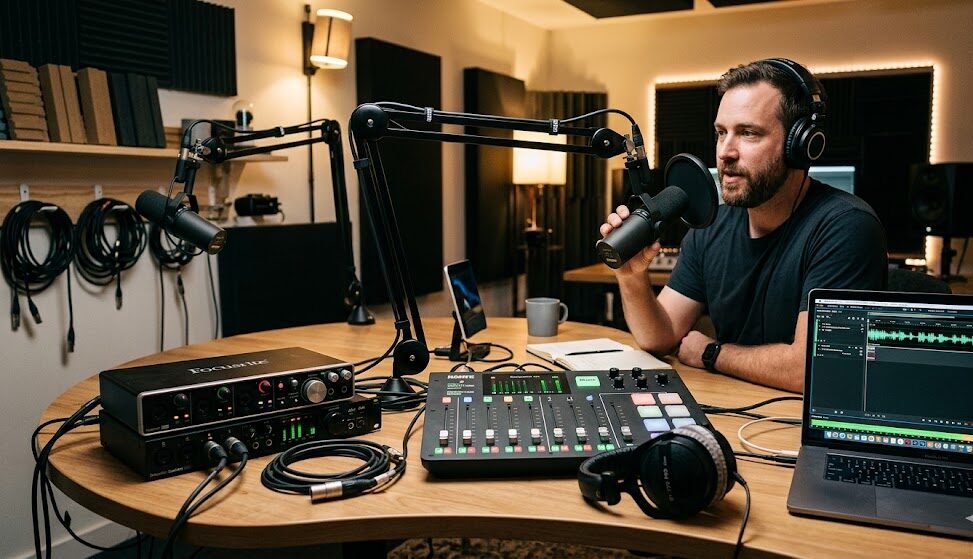
A complete podcast studio typically revolves around three key components: microphones, mixers, and audio interfaces. Choosing the right combination can dramatically improve production quality while streamlining the recording process.
Why Audio Quality Matters More Than Ever
The podcast industry has become increasingly competitive over the last few years.
Listeners now expect audio quality comparable to professional radio broadcasts. Background noise, inconsistent volume levels, and poor microphone performance can negatively impact audience retention regardless of how valuable the content may be.
Industry experts note that investing in quality recording equipment often provides a better return than spending heavily on visual production elements.
As a result, creators are carefully evaluating studio equipment before launching new podcasts or upgrading existing setups.
Understanding the Core Components
Before comparing equipment options, it is important to understand the role of each component within a podcast studio.
Microphone
The microphone captures the speaker’s voice and serves as the most critical element in the signal chain. Even the most expensive mixer cannot compensate for poor microphone quality.
Mixer
A mixer allows creators to manage multiple audio sources simultaneously. It controls levels, applies effects, and enables live adjustments during recording or streaming sessions.
Audio Interface
An audio interface converts analog audio signals into digital data that can be processed by a computer. It also improves sound quality and reduces latency during recording.
Together, these components form the foundation of a professional podcasting environment.
Best Podcast Microphones Compared
Microphone selection depends largely on recording style, environment, and budget.
| Microphone | Type | Best For | Strength |
|---|---|---|---|
| Shure SM7B | Dynamic | Professional Podcasts | Industry-standard voice quality |
| Rode PodMic USB | Dynamic | Solo Creators | Affordable and versatile |
| Electro-Voice RE20 | Dynamic | Radio & Podcasting | Smooth vocal response |
| Audio-Technica AT2040 | Dynamic | Beginners | Excellent value |
| Neumann BCM 705 | Dynamic | Premium Studios | Exceptional clarity |
Dynamic microphones remain the preferred choice for podcasting because they naturally reject background noise and perform well in untreated rooms.
The Shure SM7B continues to dominate professional podcast studios thanks to its warm tone and broadcast-quality performance.
Best Podcast Mixers Compared
Mixers are particularly useful for creators managing multiple hosts, guests, or live streams.
| Mixer | Channels | Key Features |
|---|---|---|
| RodeCaster Pro II | Multiple | Podcast-specific controls |
| Tascam Mixcast 4 | 4 | Built-in recording tools |
| Zoom PodTrak P8 | 6 | Portable podcast production |
| Yamaha MG10XU | 10 | Reliable analog workflow |
| Allen & Heath ZEDi-10 | 10 | Hybrid mixer-interface design |
Dedicated podcast mixers have gained popularity because they simplify production workflows while integrating recording, sound effects, and remote interview features.
Many creators now prefer all-in-one podcast consoles over traditional mixing desks.
Best Audio Interfaces Compared
For podcasters who prioritize recording quality over live mixing, audio interfaces often provide the best solution.
| Audio Interface | Inputs | Best For |
|---|---|---|
| Focusrite Scarlett 2i2 4th Gen | 2 | Solo and Duo Podcasts |
| Universal Audio Apollo Twin X | 2 | Professional Production |
| MOTU M2 | 2 | Budget-Conscious Creators |
| Audient iD14 MKII | 2 | High-Quality Recording |
| SSL 2+ | 2 | Studio-Level Sound |
Audio interfaces are often preferred by podcasters who edit episodes extensively after recording and do not require live mixing capabilities.
Recommended Studio Setups by Budget
Entry-Level Setup ($300–$600)
- Audio-Technica AT2040
- Focusrite Scarlett 2i2
- Closed-back monitoring headphones
- Basic boom arm
Ideal for new podcasters seeking professional sound without a large investment.
Mid-Range Setup ($800–$1,500)
- Rode PodMic USB
- RodeCaster Pro II
- Acoustic treatment panels
- Studio headphones
Perfect for creators producing regular weekly content.
Professional Setup ($2,000+)
- Shure SM7B
- Universal Audio Apollo Twin X
- Dedicated studio monitoring
- Professional acoustic treatment
Designed for commercial podcast networks and broadcast-quality production.
Additional Trends Shaping Podcast Studios in 2026
Artificial intelligence is becoming increasingly integrated into podcast production.
Modern recording software can automatically remove background noise, level audio, identify speakers, and generate transcripts within minutes. This technology significantly reduces post-production workloads.
Remote podcasting is another major trend. Many creators now conduct interviews with guests located around the world using cloud-based recording platforms that maintain studio-quality audio.
Additionally, video podcasting continues to expand, encouraging creators to build hybrid studios capable of supporting both audio and video production simultaneously.
Acoustic Treatment Remains Essential
Even the best microphone cannot compensate for a poor recording environment.
Professional podcasters increasingly invest in acoustic treatment solutions such as:
- Acoustic foam panels
- Bass traps
- Diffusers
- Sound isolation shields
- Heavy curtains and carpeting
These treatments reduce echo and improve recording clarity, often producing greater improvements than upgrading equipment alone.
Which Setup Is Best?
The ideal setup depends on content goals and workflow requirements.
Creators focused on solo interviews may achieve excellent results with a high-quality microphone and audio interface. Larger productions involving multiple hosts and live guests often benefit from dedicated podcast mixers.
For most professionals, the combination of a premium dynamic microphone, a reliable interface or mixer, and proper acoustic treatment offers the best balance between quality and efficiency.
As podcast audiences continue to grow worldwide, investing in professional-grade audio equipment remains one of the most effective ways to stand out in an increasingly competitive industry.
