

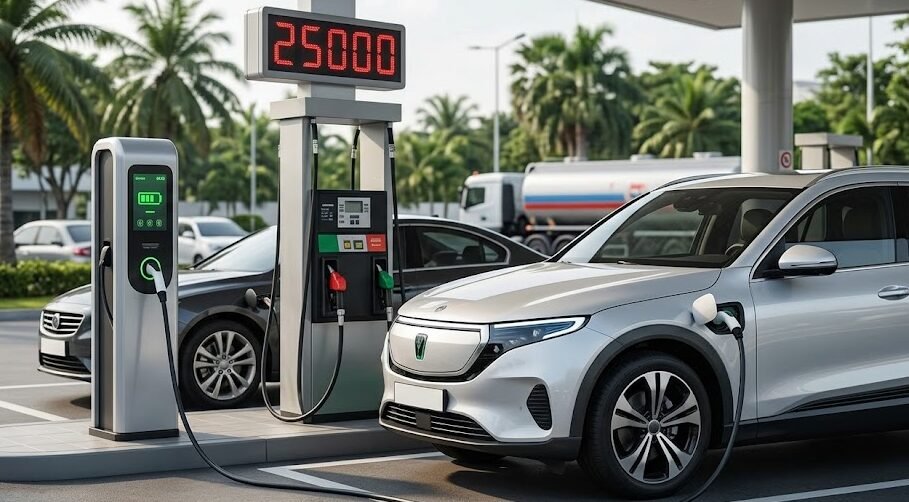
MEDAN, HALOSUMUT.COM – The surge in fuel prices (BBM), which has now reached IDR 25,000 per liter, is increasingly squeezing the public’s economy. In the midst of this difficult situation, the shift to electric vehicles (EVs) is starting to be seen as the most realistic and efficient alternative for daily mobility.
Based on observations in several regions, the spike in fuel prices has caused transport costs to skyrocket, impacting the prices of basic necessities. This condition has forced many vehicle owners to rethink their long-term budget for using internal combustion engine (ICE) vehicles.
Electric vehicles, both cars and motorcycles, offer much lower operational costs compared to conventional vehicles. With an increasingly integrated charging infrastructure, the public is starting to see that transitioning to clean energy is not just about lifestyle, but a strategic move to save on monthly expenses.
Several EV users have admitted that the cost of charging batteries is significantly cheaper than filling up with fuel at the current price of IDR 25,000. In addition, various government incentives, such as tax reductions and subsidies for purchasing electric motorcycles, have become a strong magnet for people to make the switch.
Industry observers predict that the trend of using electric vehicles will continue to grow rapidly as fuel prices remain high. This momentum is also expected to accelerate the achievement of the national emission reduction target through the adoption of more environmentally friendly technology.
The massive shift towards electric vehicles in North Sumatra and surrounding areas must be balanced with the expansion of Public Electric Vehicle Charging Stations (SPKLU). Currently, while charging at home is an option, the availability of fast-charging stations in public areas and along inter-city routes is crucial to eliminate “range anxiety” among new users.
Furthermore, the local government is expected to collaborate with the private sector to provide more battery swapping stations (SPBKLU) for electric motorcycles. This initiative would significantly assist online transportation drivers and logistics workers who require high mobility without long waiting times for charging.
