

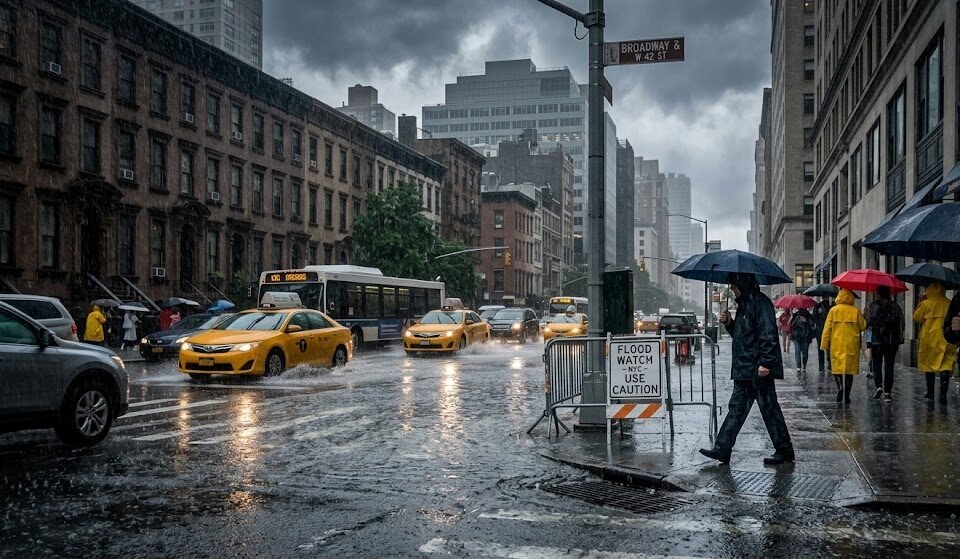
HALOSUMUT.COM – Extreme weather conditions are currently putting millions of residents on high alert across the northeastern United States. A comprehensive flood watch and urgent flash flood warnings have been officially issued for several major states, including New York, New Jersey, Pennsylvania, and Maryland.
Local meteorological departments have sounded the alarm as a powerful, slow-moving storm system moves into the region, threatening to unleash torrents of continuous heavy rain over highly populated metropolitan areas.
Weather experts have warned that the incoming atmospheric disturbance carries an immense moisture profile, raising significant concerns over immediate urban flooding. Low-lying areas, highways, and basement apartments are facing elevated risks as the ground rapidly reaches its saturation point.
Authorities are strongly urging commuters and residents across New York City, Newark, Philadelphia, and Baltimore to exercise extreme caution, avoid waterlogged roadways, and stay continuously updated with real-time emergency broadcasts as the severe weather system develops.
Local transit agencies, including the Metropolitan Transportation Authority (MTA) in New York and NJ Transit, have already deployed emergency response crews to monitor critical infrastructure and clear drainage systems in anticipation of heavy runoff.
Commuters are being warned to prepare for widespread delays, potential subway station closures, and hazardous driving conditions during the peak rush hours. Public safety officials reiterate the life-saving rule: “Turn around, don’t drown,” when encountering heavily flooded intersections.
Climate scientists note that the increasing frequency and intensity of these sudden flash flood events along the US East Coast are closely linked to shifting global weather patterns.
As ocean temperatures rise, storm systems are retaining significantly more moisture, leading to catastrophic rainfall rates that easily overwhelm legacy municipal drainage systems built decades ago.
This ongoing environmental challenge has prompted local governors to call for accelerated investments in climate-resilient urban infrastructure.
As the storm system tracks across the Northeast corridor, emergency management teams remain on 24-hour standby. Residents living in high-risk flood zones are advised to secure loose outdoor items, prepare basic emergency supply kits, and closely monitor local river gauges.
Weather forecasts indicate that while the heaviest downpours are expected to subside within forty-eight hours, the risk of river flooding may persist well into the upcoming week.
