

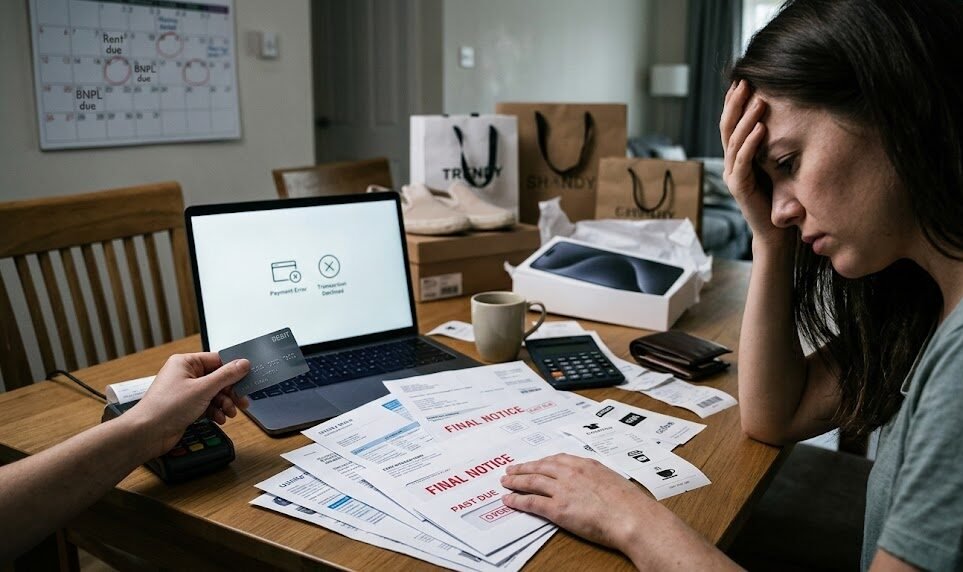
MEDAN, HALOSUMUT EN – The rapid adoption of Buy Now Pay Later (BNPL) services for lifestyle and non-essential purchases has hit a significant snag. Recent financial data indicates a sharp uptick in non-payment rates, as consumers increasingly struggle to settle debts incurred for “instant gratification” expenses like fashion, gadgets, and dining.
BNPL has transformed from a convenient payment alternative into a primary funding source for lifestyle choices. Unlike traditional loans, the seamless integration of these services into e-commerce checkout pages encourages impulse buying. Many users view the small installment amounts as manageable, often overlooking the cumulative total of multiple active plans.
The “Buy Now, Pay Later” model operates on a low-friction entry point, often requiring minimal credit checks. This accessibility is a double-edged sword. While it promotes financial inclusion, it also attracts users who may already be financially overextended. When several “small” payments coincide with monthly bills, the resulting “subscription fatigue” often leads to missed deadlines and eventual default.
The ripple effects of BNPL defaults extend beyond the individual. For the consumer, a missed payment can lead to aggressive late fees and a downgraded credit score, hindering future access to essential loans like mortgages. On a macro level, high default rates force providers to increase interest rates or tighten lending criteria, potentially slowing down digital economy growth and reducing overall consumer purchasing power.
To combat the rising tide of defaults, a multi-stakeholder approach is necessary. Financial experts suggest that BNPL providers should implement more robust real-time credit assessments and transparent “debt dashboards” to help users visualize their total liabilities. For consumers, the solution lies in “financial mindfulness”—strictly limiting BNPL use to essential goods and ensuring that total monthly installments do not exceed 10% of their take-home pay.
Behavioral economists note that BNPL reduces the “pain of paying.” By decoupling the pleasure of the purchase from the loss of money, consumers are psychologically predisposed to spend more than they would with cash or a standard debit card. This is particularly prevalent in the 18-35 demographic, where lifestyle aesthetic is often prioritized over long-term financial stability.
The Financial Services Authority (OJK) has been closely monitoring the growth of digital financing. New regulations are being discussed to ensure that BNPL providers are more integrated with the National Credit Information System (SLIK). This would prevent “loan stacking,” where a user takes out multiple installments across different platforms without each provider knowing the user’s true debt level.

1 Comment
Pingback: Shifting Paradigms: US Bank at FinovateSpring 2026 Reveals How Embedded Finance is Redefining Traditional Banking - Halo Sumut